UNICEF Supported National Evaluation Framework Launched to Strengthen Governance in Sierra Leone
Freetown, Sierra Leone – April 22, 2026
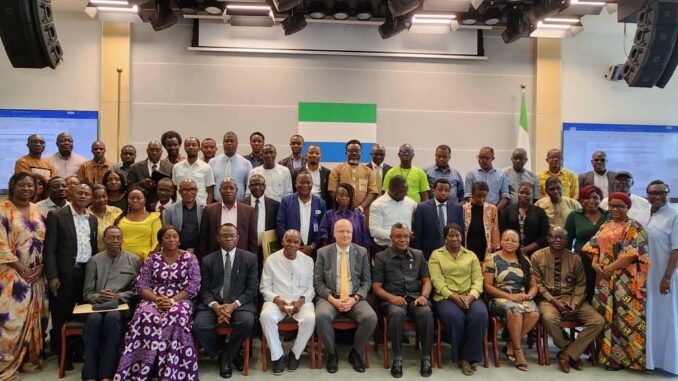
Sierra Leone has taken a significant step toward strengthening accountability and evidence based governance with the official launch of the National Evaluation Guidelines and the Evaluation Capacity Readiness Assessment (NECRA). The landmark event, organized by the National Monitoring and Evaluation Agency (NaMEA) in collaboration with UNICEF and other development partners, was held at the Foreign Affairs Academy Hall in Tower Hill.
The launch brought together senior government officials, development partners, policy experts, and representatives from civil society, all united in a shared commitment to advancing the country’s monitoring and evaluation (M&E) systems.
In his opening remarks, NaMEA’s Director General, Dr. James Edwin, emphasized that the Agency’s work is not merely about establishing systems, but about ensuring those systems drive informed decision making and strengthen governance. He pointed to ongoing progress, including the successful integration of the Ministry of Agriculture into the NaMEMIS platform following staff training, as well as the implementation of the LOMEMIS system, which tracks the distribution of textbooks from Freetown to final beneficiaries an initiative aimed at improving transparency and accountability.
Dr. Edwin stressed that effective system control is central to accountability, which in turn fosters transparency. He also revealed that a set of nine recommendations has been developed to guide implementation of the newly launched frameworks, alongside a two-year strategic plan anchored in the country’s capacity development priorities. According to him, the National Evaluation Guidelines will provide practical tools to enhance compliance with key oversight institutions such as the Audit Service Sierra Leone, the Anti-Corruption Commission (ACC), and the Right to Access Information Commission (RAIC). He further called for the promotion of a strong culture of learning across government institutions.
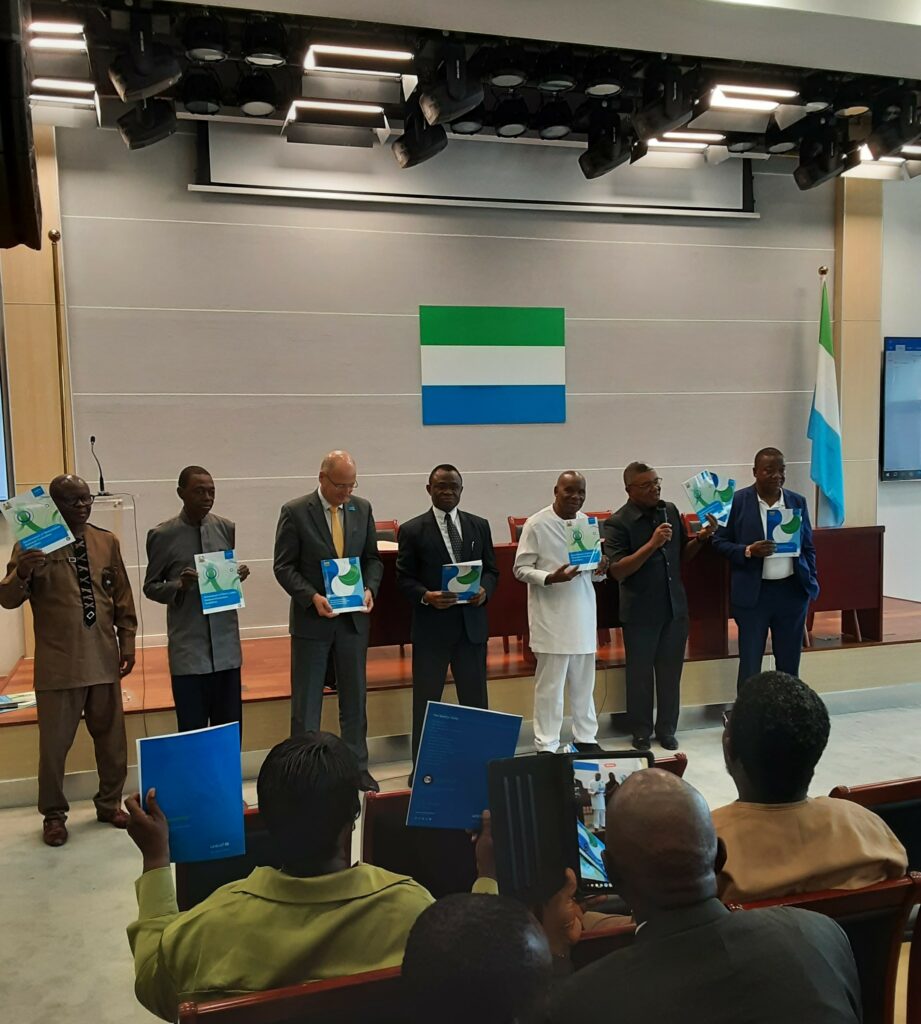
Speaking at the event, UNICEF Representative Mr. Rudolf Schwenk described the launch as a major milestone in building a robust national evaluation system. He noted that effective evaluation frameworks are essential for improving policies, strengthening programmes, and ensuring accountability. Commending NaMEA’s leadership, he noted the importance of sustained collaboration among government, development partners, academia, and civil society in ensuring the long term success of the initiative.
Adding a government perspective, Dr. Emmanuel Giama highlighted the need to reframe monitoring and evaluation as a tool for learning and empowerment rather than a punitive mechanism. He underscored the role of M&E in building institutional capacity and improving public resource management. The Evaluation Capacity Readiness Assessment, he explained, serves as a diagnostic tool, identifying key challenges such as limited capacity, fragmented systems, weak coordination, and poor data integration.
Dr. Giama also emphasized the importance of data attribution in measuring outcomes and called for stronger institutional coordination and public sector reform. He outlined a national vision in which data informs policy decisions while policies, in turn, strengthen data systems.
The President of the Sierra Leone Evaluation Association (SLEA) described the launch as a historic milestone in institutionalizing evaluation practice in the country. She acknowledged UNICEF’s support in both developing the National Evaluation Guidelines and establishing SLEA. The Association, she noted, is committed to promoting professionalism, accountability, gender inclusion, and knowledge sharing within the evaluation sector.
Drawing on findings from the readiness assessment conducted across Ministries, Departments, and Agencies (MDAs), as well as NGOs and civil society organizations, she highlighted existing gaps in institutional structures, resource management, programme implementation, and stakeholder engagement. She stressed the need to move beyond activity based reporting toward results based evaluation and learning, adding that real progress will depend on strong government commitment, donor alignment, and continuous capacity strengthening.
She concluded with a call to action, urging stakeholders to focus on implementation rather than documentation, noting that it is the application of evaluation findings that ultimately drives meaningful change.
The launch of the National Evaluation Guidelines and the Evaluation Capacity Readiness Assessment signals a new chapter in Sierra Leone’s governance landscape. By strengthening evaluation systems and promoting the use of evidence in decision making, the initiative is expected to enhance transparency, improve public sector performance, and deliver better outcomes for citizens.
Leave a Reply